When Illness Becomes Normal — Metabolic Breakdown, Pseudoscience, and the Cost of Calling Pathology Progress

When Illness Becomes Normal — Metabolic Breakdown, Pseudoscience, and the Cost of Calling Pathology Progress

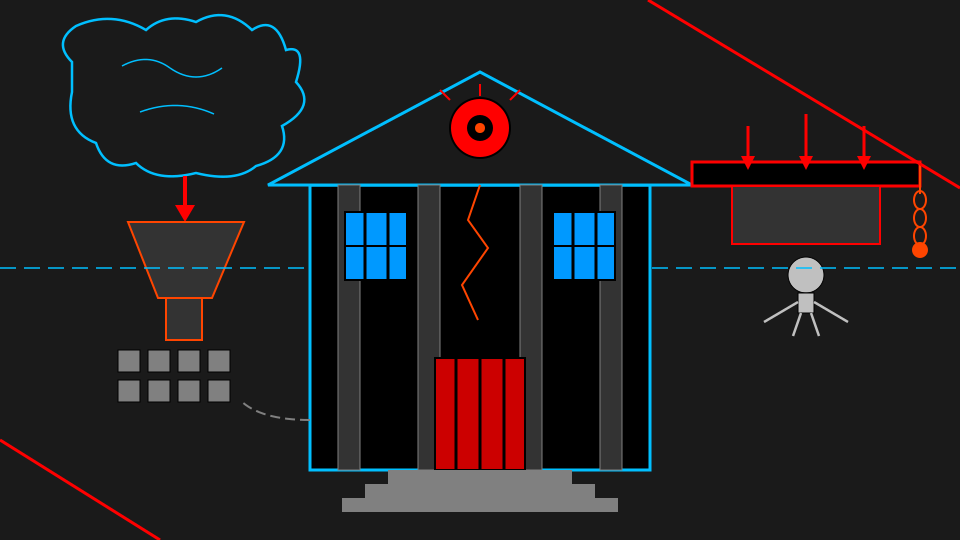
Ask a surgeon why the gallbladder came out, and the answer arrives fast, almost cheerful: you don’t really need it. That’s true in the narrow sense that a person can live, eat, and digest fat well enough without one. It’s also one of the most quietly revealing sentences in modern medicine. Cholecystectomy — removal of the gallbladder — is now among the most common abdominal operations performed in the country doing the most of them, and the organ is coming out almost always because of gallstones that track, closely, with obesity and insulin resistance. Nobody is treating a design flaw in the gallbladder. They are treating the downstream damage of a metabolic environment the organ was never built to survive, and calling the removal a fix rather than a receipt. …

July 21, 2026 · 6 min · 1235 words · Gonzalo Contento
Learning Convivence in an Abundant World — Why Hunger and War Survive Plenty

Learning Convivence in an Abundant World — Why Hunger and War Survive Plenty

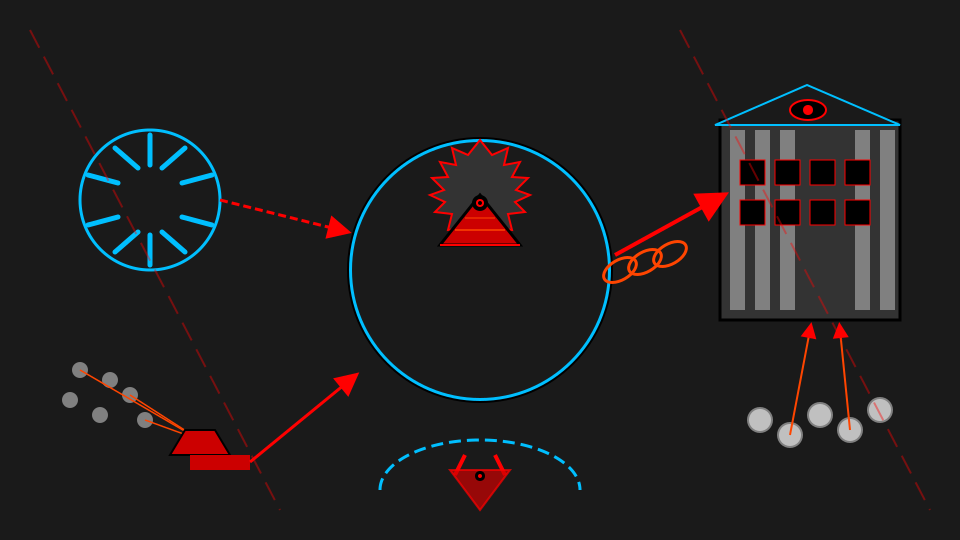
For most of history, scarcity was the honest explanation for suffering. There was not enough grain, not enough land, not enough medicine, so people starved and fought over what little existed. That explanation has been quietly running out of road for decades. The world produces enough calories to feed everyone alive today several times over, and still tens of millions go hungry every year while wars that serve no one’s stated interest grind on past the point of any rational return. The bottleneck was never only what we can produce. It is what we can agree to do with it. …

July 20, 2026 · 7 min · 1428 words · Gonzalo Contento
Roman Sanitation — The Discontinuity

Roman Sanitation — The Discontinuity

By the first century CE, Rome supplied its citizens with water through eleven aqueducts. The Cloaca Maxima, the great sewer, still stands—the oldest working infrastructure in the world. Frontinus, appointed superintendent of aqueducts in 97 CE, left behind a technical manual on water management that reads like a modern utility document. The Romans understood that filth and disease traveled together. They built public latrines with running water. They regulated waste disposal. They organized the collection of garbage in the streets. …

June 30, 2026 · 7 min · 1473 words · Gonzalo Contento