I am not a physician, nutritionist, or licensed healthcare practitioner, and I am not selling a medication, a supplement, or a diet. Nothing here is medical advice, diagnosis, or treatment — it is part anecdote, part working hypothesis, part established science, and a personal map of authors I find worth taking seriously. For anything concerning your own health, consult a qualified professional who knows your case.
Updated 2026-08-13 — rewrote the page as an essay tying insulin resistance, food, sleep, movement, stress, isolation, and status together as one argument; added a section on legal drugs, social connection, and status/health; the presentation built from this essay is coming soon; the working reading list below now sits under Further reading, extended with the new sources the essay cites.
Updated 2026-07-21 — added a Gallbladder and Gallstones section (Dr. Eric Berg, Chris Kresser, Nesse & Williams, and the insulin-resistance mechanism papers) and added Dr. David Sinclair to Longevity and Healthspan; refreshed the video and book tables.
Updated 2026-07-08 — added Featured, Sleep, Exercise, and Metabolic Psychiatry sections (incl. Dr. Sean O’Mara on sprinting and visceral fat); folded channel links into each entry; refreshed the video and book tables.
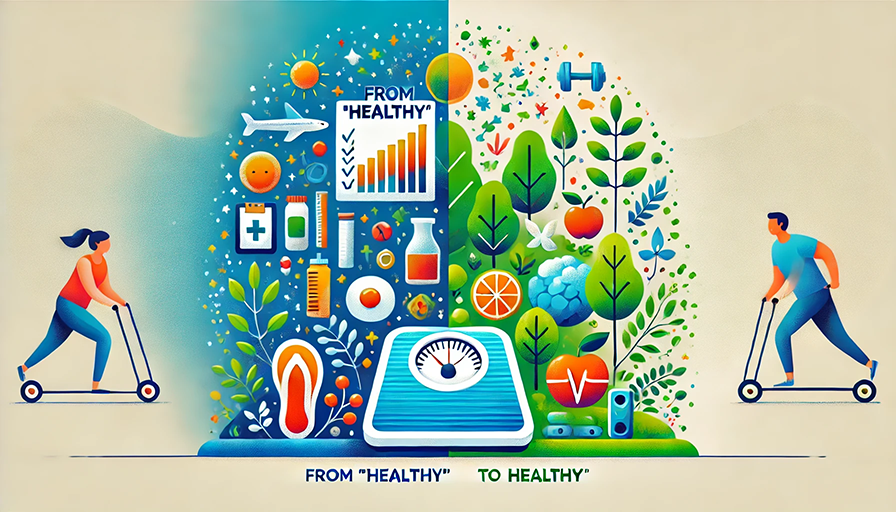
“Healthy” is a marketing word. What it means in biological terms is a system maintaining homeostasis: regulated blood glucose, low systemic inflammation, functional insulin sensitivity, adequate sleep architecture, an intact gut barrier. Most of what the food, supplement, and pharmaceutical industries sell as “health” targets the appearance of these conditions — or suppresses their downstream symptoms — without addressing the upstream causes.
You can follow the standard advice for a decade — count the calories, join the gym, take the annual physical — and still arrive at fifty insulin resistant, inflamed, and told your labs are “normal.” Normal, in most clinical panels, means not yet at the threshold where a drug gets prescribed. It does not mean the system regulating your blood sugar, your appetite, and your mood is actually working. There is a wide, undiagnosed territory between those two conditions, and almost nothing in the standard advice is built to find you there. What follows is an attempt to walk that territory in one pass — not as a dozen separate self-help topics, but as one mechanism wearing many costumes: insulin resistance as the hub, and food, sleep, movement, stress, isolation, and status as the spokes. The full working list of researchers and books behind it — the one this page has always kept — is assembled underneath, under Further reading.
I. The wrong goal.
Ben Bikman’s Why We Get Sick makes the single most useful reframe in this entire subject: insulin resistance is not one disease among many, it is the upstream condition behind most of them — cardiovascular disease, type 2 diabetes, fatty liver, PCOS, a meaningful share of Alzheimer’s. Losing weight is not the goal. Lowering a number on a scale is not the goal. The goal is a cell that still hears insulin’s signal — and almost every choice that follows is downstream of that one target.
Functional medicine, in the tradition Dr. Casey Means lays out in Good Energy and Dr. Carlos Jaramillo practices daily with Spanish-speaking patients in El milagro metabólico, is less a treatment protocol than a stance: ask why the system went out of balance before asking what pill suppresses the symptom. That stance is also what licenses an essay like this one — part anecdote, part hypothesis, part science — to exist honestly, rather than pretending to a certainty medicine itself doesn’t have on most of these questions.
II. Food as it was, food as it became.
Richard Wrangham’s Catching Fire makes the case that cooking, not agriculture, is what built the human brain — fire pre-digesting food outside the body freed calories that raw digestion couldn’t extract. That’s the old, load-bearing technology. What changed is everything downstream of it: Gary Taubes, in Good Calories, Bad Calories, traces how refined carbohydrate and industrial seed oil replaced the food that built us, not gradually, but within a century — an evolutionary eyeblink. Chris van Tulleken’s Ultra-Processed People names the newer layer precisely: food engineered not to nourish but to be eaten past the point of satiety, formulated by chemists rather than grown by farmers.
Daniel Lieberman’s The Story of the Human Body supplies the frame for why this matters more than any single nutrient debate: we are running Paleolithic hardware on an industrial food supply, and most of what gets called a “disease of aging” is actually a mismatch disease — a body doing exactly what it evolved to do, in an environment it never evolved for.
III. The calorie is a lie, the snack is a symptom.
Jason Fung’s The Obesity Code makes the hormonal case directly: what you eat changes insulin, and insulin — not willpower, not a spreadsheet of calories in versus calories out — decides whether your body stores fat or releases it. Herman Pontzer’s Burn adds the physiological twist that should have ended the “just move more” era of advice: hunter-gatherer populations, dramatically more active than the average office worker, burn roughly the same total daily calories, because the body compensates for exercise by throttling energy spent elsewhere. Movement matters for a hundred reasons. It is a weak lever for the number on the scale.
Snacking is the cultural artifact of the calorie framework taken literally — eat less at each sitting, eat more often, keep insulin perpetually elevated, never let the fasted state that triggers fat mobilization actually arrive. Robert Lustig’s Metabolical names the industry that profits from exactly this pattern: constant small hits of engineered palatability, sold as a solution to the hunger that same industry helped create.
IV. Sleep, light, and the clock we ignore.
Matthew Walker’s Why We Sleep remains the widest-reaching case that sleep is not downtime but active metabolic maintenance — one bad night measurably worsens insulin sensitivity the next day. Satchin Panda’s The Circadian Code extends the argument to the variable modern life treats as trivial: light. Every cell runs its own clock, synchronized by the timing of light and food, and a species that evolved under a sun with no dimmer switch now spends its evenings under screens and its days under office fluorescents, telling every organ a different, contradictory time. Circadian misalignment is not an aesthetic complaint about jet lag. It’s a direct input into the same insulin-resistance pathway as diet.
V. Move like the body expects to move.
Dr. Sean O’Mara’s clinical argument, built on his own before-and-after MRI imaging, is that the specific exercise most absent from modern life is the sprint — not the marathon, not the daily gym routine, but short, maximal, infrequent effort. His case is that sprinting uniquely mobilizes visceral fat, the metabolically dangerous fat wrapped around the organs that BMI cannot see and steady-state cardio barely touches. The broader point generalizes past sprinting specifically: the body was built for irregular bursts of high intensity punctuating long stretches of low-intensity movement, not for either total stillness or a scheduled hour of “exercise” bracketing twenty-three sedentary ones.
VI. The stress machine.
Robert Sapolsky’s Behave and his earlier Why Zebras Don’t Get Ulcers diagnose the actual malfunction: the cortisol response evolved to end a lion chase in ninety seconds, not to run continuously against a mortgage, a news cycle, and an inbox for forty years. Chronically elevated cortisol drives the same insulin resistance the earlier sections describe from a different direction — stress and sugar are not separate chapters, they’re two inputs into one hormonal system.
Legal drugs enter here because most of what people use to manage that chronic stress — caffeine, alcohol, nicotine, benzodiazepines, stimulants prescribed for attention rather than genuinely optimized for it — get used without the rational framework applied to almost anything else consumed daily. Carl Hart’s Drug Use for Grown-Ups, written by a Columbia neuroscientist rather than a moralist, makes the case that treating drug use as a binary of abstinence versus catastrophe produces worse outcomes than treating it as what it actually is: a risk to be managed with information, dosage, and honesty, the same way we manage everything else in this essay.
VII. The body needs a village.
Vivek Murthy’s Together, written from his tenure as US Surgeon General, makes the case that loneliness is not a mood problem — it’s a measurable, independent risk factor for early death, on par with smoking. Social isolation raises cortisol and inflammatory markers through the same stress pathway Section VI describes; the body reads disconnection as a threat because for most of human history, exile from the group was a threat, often a fatal one. Modern life has quietly re-created that exile at scale — smaller households, remote work, screens standing in for the third places where people used to simply be around each other — without the predator that used to make isolation a solvable, visible problem.
VIII. Status, merit, and the pressure that makes you sick.
Sir Michael Marmot’s The Status Syndrome supplies the direct biological link this essay has been building toward: your position in a status hierarchy predicts your health independent of income, independent of access to care — because rank itself, not just resources, regulates the stress-hormone system covered in Section VI. This is the same territory The New Job Market covers from the labor-market side — Michael Sandel’s The Tyranny of Merit on what the meritocratic story does to the people it tells they lost fairly, Richard Wolff on wages as a power negotiation, Scott Galloway on what actually gets rewarded — argued there as a structural critique of opportunity, argued here as a direct physiological cost. The pressure to out-earn, out-credential, and out-produce your neighbor is not just an economic condition. It’s a hormonal one, and it compounds with everything in Sections I through VII rather than sitting apart from them.
Presentation
[ Coming soon… ]
Further reading
The people and books below are the raw material this essay draws from — the working list this page has always kept, extended with the sources behind the newer sections above (nutrition and the food supply, calories, sleep and light, stress and legal drugs, isolation, and status).
Featured
| Dr. William Davis on fermented dairy | Super Gut (2022): the argument that the modern gut has lost keystone bacterial species — and the kitchen-counter response: extended-fermentation dairy that restores them, most famously his Lactobacillus reuteri yogurt, fermented ~36 hours, far beyond anything commercial. Start with his video Making Fermented Dairy; his broader work is in the Cholesterol section below. |
| Dr. Carlos Jaramillo | Colombian functional-medicine physician and the best Spanish-language communicator on this entire list. El milagro metabólico (2019) and El milagro antiestrés (2020) bring root-cause medicine to an audience the English-speaking authors never reach. His YouTube channel is worth following regardless of your first language. |
| Dr. Sean O’Mara on sprinting | The clearest voice on visceral fat — the deep, organ-wrapping fat that standard weight and BMI miss entirely — and its reversal. His central, counter-intuitive prescription: sprinting, not steady-state cardio, as the single most effective intervention for stripping visceral fat and restoring performance, backed by his own before-and-after MRI imaging. See the Exercise section below; his work lives at drseanomara.com and on YouTube. |
The Functional Medicine Framework
Functional medicine treats the body as a web of interconnected systems rather than a collection of isolated organs managed by separate specialists. Where conventional medicine asks what disease you have, functional medicine asks why the system has gone out of balance — looking for upstream causes: gut permeability, hormonal dysregulation, chronic low-grade inflammation, mitochondrial dysfunction, nutrient insufficiency, toxin load.
The Institute for Functional Medicine (IFM) is the main professional body training and certifying practitioners. The resources below are the most useful entry points:
| Dr. Mark Hyman | Head of Strategy at Cleveland Clinic’s Center for Functional Medicine. His YouTube channel is the highest-volume accessible entry point to functional medicine thinking. Books: The Blood Sugar Solution, Food: What the Heck Should I Eat?, Young Forever. |
| Dr. Casey Means | Good Energy (2024): metabolism as the operating system of health, continuous glucose monitoring as the diagnostic tool, real food as the primary intervention. The clearest current synthesis of the whole argument. |
| Dr. Jeffrey Bland | The founder of functional medicine as a formal discipline and co-founder of the IFM. The Disease Delusion (2014) is the foundational text explaining why the conventional organ-by-organ model fails for chronic disease. |
| Dr. Ben Bikman | Why We Get Sick (2020): the case that insulin resistance is the single upstream cause behind cardiovascular disease, type 2 diabetes, Alzheimer’s, PCOS, fatty liver, and most other major chronic conditions. Research-grade, readable. |
| Dr. Dale Bredesen | The End of Alzheimer’s (2017) and The First Survivors of Alzheimer’s (2021): the ReCODE protocol, reversing cognitive decline through a functional medicine approach targeting 36 metabolic factors. The most striking proof-of-concept for the model. |
| Dr. David Perlmutter | Grain Brain (2013), Brain Wash (2020): neurologist applying functional medicine to cognitive and mental health. The gut-brain axis as a central clinical target. |
Metabolic Health
The central insight of metabolic medicine: insulin resistance and chronic low-grade inflammation are the engine behind most modern chronic disease. Tools for assessment that go beyond BMI: fasting insulin, HOMA-IR, HbA1c, hsCRP, triglyceride-to-HDL ratio, uric acid.
| Dr. Jason Fung | The standard reference on therapeutic fasting: The Obesity Code (2016) and The Complete Guide to Fasting (2016, with Jimmy Moore). Counter-intuitive, evidence-based, and the clearest explanation of why caloric restriction alone fails. YouTube. |
| Dr. Sten Ekberg | Exceptionally clear YouTube explanations of insulin resistance, fasting physiology, and metabolic function. Best entry point for people new to the framework. |
| KenDBerryMD | Evidence-based and direct. Strong on dispelling clinical myths that persist in standard practice despite the evidence against them. YouTube. |
| Dr. Carlos Jaramillo | El milagro metabólico — the most accessible Spanish-language resource on metabolic health. Required reading for Spanish-speaking patients who can’t find this conversation with their physicians. YouTube. |
| Dr. Nick Norowitz | Metabolic health researcher and clinician. YouTube · X. |
Gallbladder and Gallstones
The gallbladder is a small, concentrated case of the whole functional-medicine argument: cholecystectomy is one of the most common abdominal surgeries performed, and “you don’t need that organ” gets treated as a self-contained fact rather than as the endpoint of a metabolic process that started elsewhere. Dietary fat was never the strongest predictor of gallstone formation — hepatic insulin resistance is. Insulin-resistant liver tissue increases biliary cholesterol secretion and produces lithogenic bile directly, which is the mechanistic finding behind the clinical correlation between HOMA-IR, waist circumference, and gallstone risk. I made this exact case the opening argument of When Illness Becomes Normal, on cholecystectomy as the concentrated case for reading chronic metabolic illness as one ecological shift rather than six unrelated diagnoses.
| Dr. Eric Berg | Two videos that directly challenge the standard “low-fat diet prevents gallstones” advice: What Really Causes Gallstones? and Should I Remove My Gallbladder If I Have Stones?. |
| Chris Kresser | The Little-Known Connection between Leaky Gut, Gluten Intolerance, and Gallbladder Problems — the functional-medicine case for treating gallbladder dysfunction as a downstream effect of gut inflammation rather than an isolated organ failure. |
| Randolph Nesse & George Williams | Why We Get Sick: The New Science of Darwinian Medicine (1994) — not gallbladder-specific, but the foundational evolutionary-medicine framework for why an organ built to concentrate bile for intermittent, hard-won dietary fat fails on schedule under constant refined sugar and processed fat. |
Mechanism and epidemiology, for the primary-source-inclined: Biddinger et al., “Hepatic insulin resistance directly promotes formation of cholesterol gallstones” (Journal of Clinical Investigation, 2008) is the mouse study establishing the causal pathway; Gallstones in the Era of Metabolic Syndrome: Pathophysiology, Risk Prediction, and Management is a recent clinical review of the human epidemiology.
Metabolic Psychiatry
The newest and one of the most consequential extensions of the metabolic thesis: that many psychiatric conditions are, mechanistically, metabolic disorders of the brain. If insulin resistance and mitochondrial dysfunction drive chronic physical disease, the same machinery may underlie depression, anxiety, bipolar disorder, and more — which reframes diet, sleep, and metabolic health as first-line mental-health interventions rather than adjuncts.
| Dr. Chris Palmer | Harvard psychiatrist. Brain Energy (2022) unifies mental illness under a single framework — mental disorders as metabolic disorders of the brain — connecting genetics, inflammation, hormones, neurotransmitters, sleep, stress, and trauma through metabolism. The strongest recent bridge between the metabolic argument and mental health. |
Cholesterol and Lipids — Correcting the Standard Story
The conventional model of cholesterol — LDL as universal villain, statins as universal solution — does not survive contact with the full evidence base. Particle size, metabolic context, and the distinction between LDL-C and LDL-P matter significantly. For people eating low-carbohydrate or ketogenic diets, the standard markers are particularly poor guides.
| Dave Feldman | Engineer turned citizen scientist. His Lipid Energy Model explains why LDL rises on low-carb diets and why this does not straightforwardly map to increased cardiovascular risk in metabolically healthy individuals. The most important heterodox voice in this space. YouTube. |
| Dr. Cywes (Carb Addiction Doc) | Addiction framing applied to carbohydrate overconsumption. Clinically useful for understanding why willpower-based interventions reliably fail. YouTube. |
| Dr. William Davis | Wheat Belly (2011), Undoctored (2017), Super Gut (2022): the case against modern wheat, for self-directed metabolic health management, and for restoring the gut microbiome through fermentation. YouTube. |
| Ivor Cummins (Fat Emperor) | Irish engineer turned metabolic health researcher. Strong on the epidemiology of cardiovascular disease and the structural weaknesses of the lipid hypothesis. |
Nutrition
| Dr. Paul Saladino (CarnivoreMD) | The most rigorous version of the animal-based argument. More useful as a corrective to plant-centric dietary dogma than as a universal prescription — but the data on anti-nutrients and plant defense chemicals is worth engaging with seriously. YouTube. |
| Dr. Eric Berg | High-volume, practical content on low-carb eating, intermittent fasting, and nutrient deficiencies. Accessible. YouTube. |
| Dr. Rhonda Patrick (FoundMyFitness) | Micronutrients, sauna therapy, cold exposure, vitamin D, omega-3s. Research-focused; excellent coverage of the longevity and performance literature. |
| Dr. Robert Lustig | Metabolical (2021): the food system as the root of the chronic disease epidemic. The most comprehensive critique of ultra-processed food from a biochemical standpoint. |
| Gary Taubes | Good Calories, Bad Calories (2007): the book-length case that refined carbohydrate, not dietary fat, is the driver of the modern metabolic crisis — the foundational text behind the low-carb research programme. |
| Chris van Tulleken | Ultra-Processed People (2023): a UCL infectious-disease physician’s self-experiment and literature review on food engineered to be eaten past satiety. The most precise definition available of what makes a food “ultra-processed.” |
| Richard Wrangham | Catching Fire: How Cooking Made Us Human (2009): the evolutionary-anthropology case that cooking, not agriculture, built the human brain — essential background for distinguishing old food technology from the industrial kind. |
| Herman Pontzer | Burn (2021): the constrained total energy expenditure model — hunter-gatherers burn about the same daily calories as sedentary office workers, which undercuts “just move more” as weight-loss advice and redirects the calorie question toward hormones instead. |
| Daniel E. Lieberman | The Story of the Human Body (2013): the “mismatch disease” framework — Paleolithic bodies running on an industrial food and activity environment they never evolved for. |
Sleep and Light
Sleep is the pillar the other three (nutrition, exercise, metabolic health) all depend on — and the one most easily sacrificed. Poor sleep drives insulin resistance, appetite dysregulation, and impaired glucose tolerance directly, which folds it back into the metabolic story rather than sitting beside it. Circadian light exposure is the less obvious variable behind it: every cell keeps its own clock, synchronized by light and food timing.
| Dr. Matthew Walker | Why We Sleep (2017): the most influential popular account of sleep’s role in memory, metabolism, immunity, and mood. Read it as the case for taking sleep seriously — while noting that several of its stronger statistical claims have drawn substantive criticism, so treat the specifics as a starting point, not gospel. His The Matt Walker Podcast is a good ongoing source. |
| Dr. Satchin Panda | The Circadian Code (2018): the Salk Institute researcher behind time-restricted eating, on how light and meal timing synchronize the body’s cellular clocks — and what happens metabolically when they fall out of sync. |
Exercise
Muscle is metabolic real estate: it is the largest site of glucose disposal in the body, which makes strength and cardiovascular fitness metabolic interventions, not just aesthetic ones. Attia’s Outlive (below) treats VO₂max and strength as among the strongest predictors of healthspan.
| Dr. Stacy Sims | Roar (2016) and Next Level (2022): exercise physiology and nutrition built around female physiology specifically — the counter to the fact that most protocols are designed on and for men. Essential for women training seriously through every life stage. |
| Dr. Andy Galpin | Exercise physiologist specializing in strength, power, and adaptation. His Perform podcast and long-form interviews are the most rigorous accessible source on how to actually structure training for both performance and longevity. |
| Dr. Sean O’Mara | Former emergency physician turned performance-optimization researcher. His work centers on visceral fat — the metabolically dangerous fat wrapped around the organs — and its reversal, tracked through serial MRI. His signature argument is that sprinting is the single most effective exercise for eliminating visceral fat and restoring youthful movement and posture, outperforming both steady-state cardio (which he argues can be counterproductive in excess) and resistance training for this specific purpose. drseanomara.com · YouTube. |
Stress, Cortisol, and Legal Drugs
| Robert M. Sapolsky | Behave: The Biology of Humans at Our Best and Worst (2017) and Why Zebras Don’t Get Ulcers (1994): the Stanford neuroscientist’s case that the human stress response evolved for acute physical threats and malfunctions when run continuously against chronic modern stressors — the physiological bridge between anxiety and metabolic disease. |
| Carl L. Hart | Drug Use for Grown-Ups (2021): a Columbia neuroscientist’s argument for treating legal and illegal drug use as a manageable risk rather than a moral binary — directly relevant to the irrational way caffeine, alcohol, nicotine, and prescription stimulants actually get used day to day. |
Social Connection
| Vivek H. Murthy | Together (2020): written during his tenure as US Surgeon General, the case that loneliness is an independent, measurable mortality risk factor — on par with smoking — and a direct driver of the same stress-hormone pathway covered above. |
Status, Merit, and Health
| Sir Michael Marmot | The Status Syndrome (2004): the UCL epidemiologist’s finding that position in a social hierarchy predicts health outcomes independent of income or access to care — the direct physiological link between status and the stress-hormone system. Reads well alongside The New Job Market’s Sandel, Wolff, and Galloway material on meritocracy, argued there as economics and here as biology. |
Longevity and Healthspan
| Peter Attia MD | Outlive: The Science and Art of Longevity (2023) is the most comprehensive current book on healthspan — the distinction between living longer and living well longer. Covers metabolic health, cancer screening, cardiovascular risk, cognitive decline, and exercise physiology in rigorous detail. His podcast The Drive goes deeper on each. |
| Dr. David Sinclair | Harvard geneticist and co-director of the Paul F. Glenn Center for Biology of Aging Research. Lifespan: Why We Age—and Why We Don’t Have To (2019) makes the case that aging itself is a treatable disease rather than an inevitability, built on his lab’s work on sirtuins, NAD+, and epigenetic reprogramming — the information-theory-of-aging idea that cells lose their identity over time rather than only accumulating damage. His podcast Lifespan with Dr. David Sinclair (also on YouTube) goes deeper on NAD+ precursors, rapamycin, and fasting protocols. The most direct current bridge between Attia’s clinical healthspan framework above and the molecular biology of aging itself. |
Key Videos
| Video | By |
|---|---|
| Why LDL Cholesterol Increases on a Low-Carb Diet — The Lipid Energy Model | Dave Feldman |
| Keto Cures: HbA1c and Vascular Inflammation | Dr. Robert Cywes |
| Drinking Dairy (Good, Bad, and Delicious) | Ken Berry MD |
| Colesterol: ¿bueno y malo? Toda la verdad | Dr. Carlos Jaramillo |
| Diabetes Isn’t Permanent — This Reverses It | Dr. Jason Fung |
| Eat MORE of This Food to Reverse a Fatty Liver | Dr. Mark Hyman |
| Steps to Fat Loss with Happy Hormones, Libido, and Energy | Steak and Butter Gal |
| Why We Are Carnivores | Dr. Anthony Chaffee |
| Making Fermented Dairy | Dr. William Davis |
| What Really Causes Gallstones? | Dr. Eric Berg |
| Should I Remove My Gallbladder If I Have Stones? | Dr. Eric Berg |
Books
| Title | Author(s) | Note |
|---|---|---|
| Good Energy | Casey Means MD & Calley Means | Metabolism as the master variable; the metabolic health crisis explained. Amazon |
| Outlive | Peter Attia MD | The definitive healthspan book: exercise, metabolic health, cancer, cognitive decline, emotional health. |
| Lifespan: Why We Age—and Why We Don’t Have To | David A. Sinclair PhD | Aging as a treatable disease; sirtuins, NAD+, and epigenetic reprogramming as the underlying biology. Goodreads |
| Why We Get Sick | Ben Bikman PhD | Insulin resistance as the upstream cause of most chronic disease. |
| The End of Alzheimer’s | Dale Bredesen MD | Functional medicine applied to cognitive decline reversal. |
| The Disease Delusion | Jeffrey Bland PhD | The founding document of functional medicine as a clinical discipline. |
| Metabolical | Robert Lustig MD | The biochemical case against ultra-processed food and the medical system that enables it. |
| Super Gut | William Davis MD | Restoring the gut microbiome through extended-fermentation dairy and lost keystone species. Goodreads |
| Brain Energy | Christopher M. Palmer MD | Mental disorders as metabolic disorders of the brain. Goodreads |
| Why We Sleep | Matthew Walker PhD | The case for sleep as a metabolic and cognitive foundation. Goodreads |
| Roar | Stacy T. Sims PhD | Training and nutrition matched to female physiology. Goodreads |
| Unlocking the Keto Code | Steven Gundry MD | Amazon |
| The Great Cholesterol Myth | Jonny Bowden & Stephen Sinatra MD | Amazon |
| El milagro metabólico | Carlos Jaramillo MD | Amazon |
| Complete Guide To Fasting | Jason Fung MD & Jimmy Moore | Amazon |
| Why We Get Sick: The New Science of Darwinian Medicine | Randolph M. Nesse MD & George C. Williams PhD | Evolutionary-medicine framework behind the gallbladder/gallstones section above. Goodreads |
| Good Calories, Bad Calories | Gary Taubes | Challenging the conventional wisdom on diet, weight, and disease. Goodreads |
| Catching Fire: How Cooking Made Us Human | Richard Wrangham PhD | Cooking, not agriculture, as the key adaptation behind the human brain. Goodreads |
| Ultra-Processed People | Chris van Tulleken MD PhD | What makes a food ultra-processed, and why it’s engineered to be eaten past satiety. Goodreads |
| The Story of the Human Body | Daniel E. Lieberman PhD | Evolution, health, and disease as one mismatch story. Goodreads |
| Burn | Herman Pontzer PhD | The constrained energy expenditure model and why exercise is a weak lever for weight loss. Goodreads |
| The Circadian Code | Satchin Panda PhD | Light, meal timing, and the body’s cellular clocks. Goodreads |
| Behave: The Biology of Humans at Our Best and Worst | Robert M. Sapolsky PhD | The stress response, from the immediate to the evolutionary. Goodreads |
| Drug Use for Grown-Ups | Carl L. Hart PhD | Rational risk management as an alternative to the abstinence/catastrophe binary. Goodreads |
| Together | Vivek H. Murthy MD | Loneliness as an independent, measurable health risk. Goodreads |
| The Status Syndrome | Michael Marmot MD | Social rank and its direct effect on health and longevity. Goodreads |