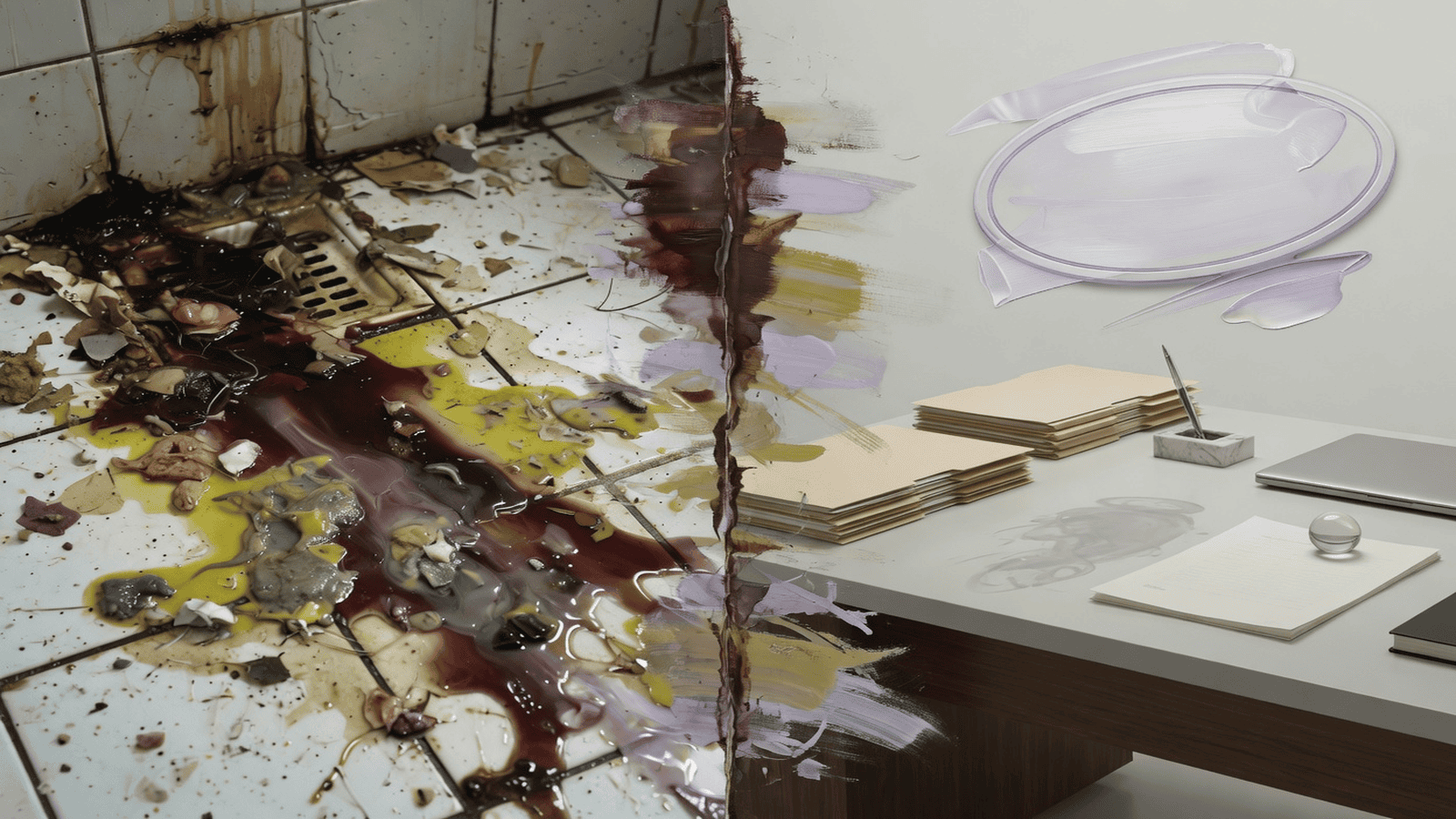
The English word “BS” has become one of the most successful insults in the language. It is not merely a synonym for falsehood. It is a way of refusing the dirty weight of a more vulgar word while still naming the same condition. In Spanish, mierda carries the smell of the body and the street. In French, merde carries the bluntness of matter and the ugly dignity of the real. English gives us BS, crisp, abstract, almost courteous. It is a very elegant way of saying that something is full of air.
I. The Question
The interesting thing about BS is not that it is vulgar. It is that it manages to be vulgar without sounding vulgar. That is its genius. The word is colloquial, but not crude. It feels modern, urban, slightly ironic. It refuses the heavy physicality of mierda or merde and replaces it with a neat, almost administrative gesture.
The question is why English so often prefers abstraction over stain.
The answer is not purely linguistic. It is partly social. Mierda and merde are bodily, sensory words. They keep the body in the language. They remember that the world is messy, material, and embarrassing. BS does something different. It names a condition without naming the body that produced it. It is a concept, not an image. It says: this thing is empty, inflated, grandiose, and structurally untrustworthy. It sounds like a technical term for a social condition. That is precisely why it works so well in office life, media, advertising, bureaucracy, and politics. It is insulting without being obscene. It is a way of calling someone out while keeping the tone respectable.
II. The Power of the Mildly Offensive
Words are never only meanings. They are atmospheres. Mierda and merde are not just words for excrement. They are words that drag the body, the mess, the material world, the embarrassing fact of being embodied. BS is almost entirely semantic. It points to emptiness, rhetoric, grandiosity, hot air. It sounds like a label for a social disease rather than a bodily fact.
That difference matters. A bodily insult is often loud and immediate. It shocks. It announces a violation. A more abstract insult moves with more subtlety. It can be used in a meeting, a classroom, a newsroom, or a political briefing where a heavier word would be inappropriate or professionally dangerous. English has a long and practical talent for turning disgust into something legible and socially manageable. This is not only about manners. It is about the cultural habit of keeping contaminant forces at arm’s length.
The real power of BS is that it is both dismissive and precise. It does not say “you are wrong.” It says “your performance is empty.” It does not say “you are lying.” It says “the structure of your claim is full of air.” That is the key distinction. It names not just falsehood, but the trademark modern form of falsehood that grows by volume, posture, and institutional confidence rather than by evidence. It is the favorite word for a world of spin, branding, and polished nonsense.
III. Why English Likes It
English has a long history of preferring clipped, socially acceptable forms for things that are morally or physically gross. The language often makes its disgust clean, light, and portable. The fuller form, “bullshit,” is more explicit. But “BS” does the real work. It is compact, dismissive, and almost polite.
This is not an accident. It belongs to a larger Anglo habit: to make discomfort practical, to turn obscenity into a manageable social signal. The result is a word that feels both rude and tidy, like a handkerchief used to wipe a stain without touching it directly. There is a very old instinct here: take the thing that is gross, make it lighter, more portable, more usable. What becomes socially acceptable is often not the moral reality itself, but a version of it that can travel in public.
This is why English can be so adept at naming falseness without appearing to say something too crude. The word itself is not as severe as the accusation it carries. It implies decay without saying where the decay is. It is a perfect word for a culture that wants to keep allegations sharp without letting them get too bodily or too accusatory. It allows contempt without the mess of a direct confrontation.
IV. The Real Interest
The real interest is not simply lexical. It is cultural. BS names not only falsehood but a specific modern style of falsehood: the sleek, inflated, self-protective, plausibly professional kind. It is the perfect word for an age of branding, spin, and managerial sincerity. A lie can be oppressive or crude. BS is more subtle: it is a lie with a polished surface, a familiar cadence, the confidence of a person who has learned to sound plausible before even thinking about whether what they say is true.
This is why George Carlin, in Napalm & Silly Putty, could do so much with the word. He was not merely making a joke about profanity. He was exposing the modern social arrangement in which language is used to make emptiness look substantial. Carlin understood that a word like BS is not just a crude synonym for deceit. It is a moral technology. It lets us say, with a small shrug and a clean consonant, that the thing in front of us is not merely wrong. It is full of air.
This is the decisive point. The word is useful because it names the whole rhetorical posture of the thing, not just its content. It describes a person speaking as if they had gravity, when in fact they are only inflated. It is not the same as lying outright. It is the stronger, more modern accusation: the speech is performing seriousness without carrying substance.
V. The Body and the Abstract
Why does English prefer the abstract? Because the abstract is more socially convenient. It keeps the insult clean. The body remains the source of the most vivid obscenity in Spanish and French, and perhaps that very proximity is exactly why those languages carry a sharper physical charge. The bodily insult is not necessarily more accurate. It is more present. It reminds us that falsehood has a material cost, a person attached to it, an ego invested in its circulation, a body that has to stand inside the lie and pretend it is not a lie.
English does the opposite. It abandons the body and keeps the sensation. It takes the condition and sends it into the air. That is why BS feels so contemporary. It is a word designed for institutions, not for the kitchen table. It belongs to a culture that likes to clean the surface before the dirt becomes visible.
That tells us a great deal about modern life. We may be more offended by mess than by fraud. We may prefer terms that clear the air before they accuse too directly. The elegance of BS is not that it is harmless. It is that it is socially usable. It gives us a standard way to say: this is not merely mistaken; it is structurally empty. And in a culture that values polish, that is a devastating accusation.