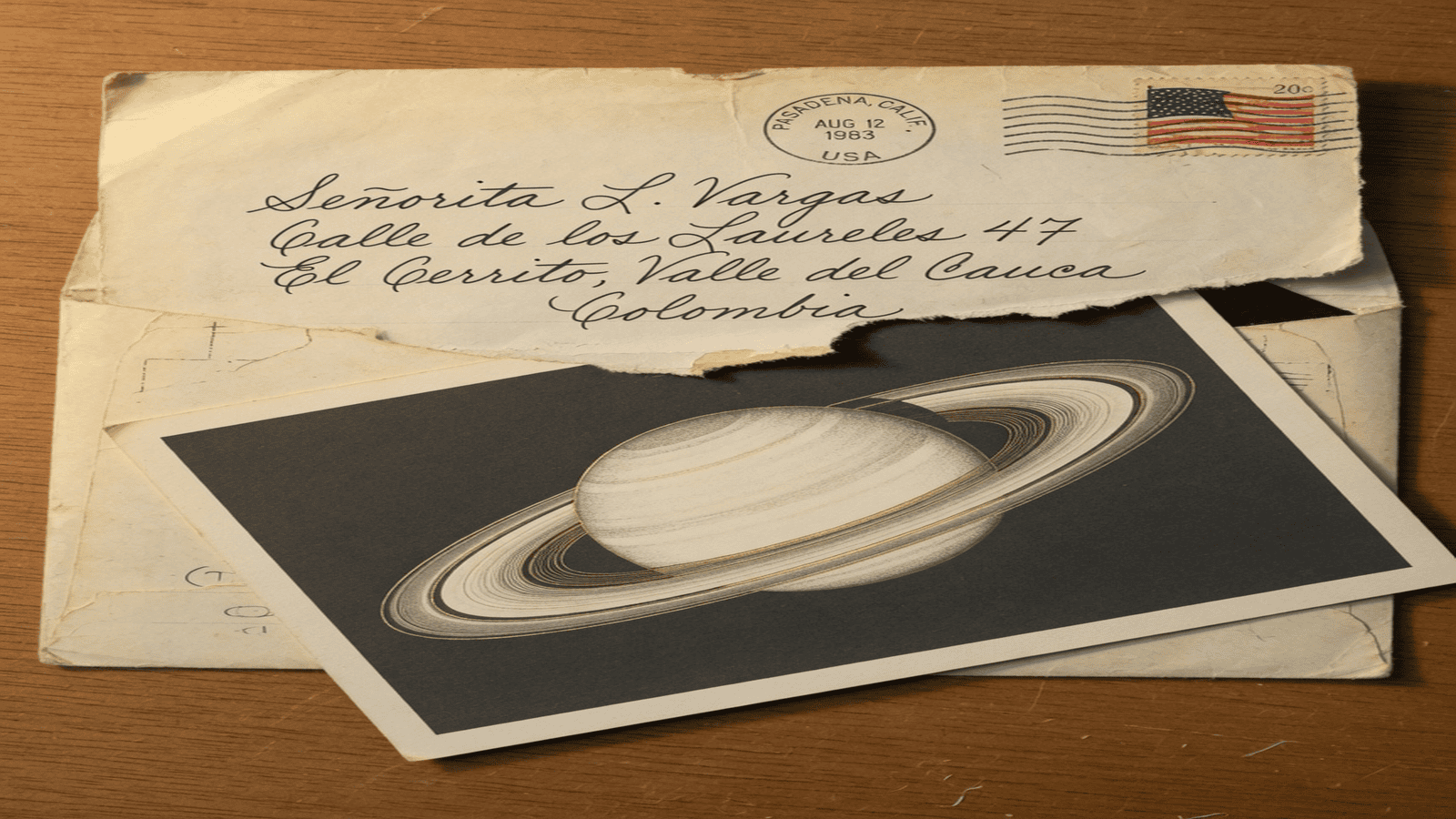
As a kid in Colombia I had a free subscription to La Pura Verdad — the Spanish edition of The Plain Truth, founded in 1934 by Herbert W. Armstrong and mailed out of Ambassador College in Pasadena, near Los Angeles. It was, unmistakably, evangelical literature: prophecy, end-times reasoning, a specific reading of scripture aimed at conversion. I was never a Christian. Nothing about the magazine’s theology took. And yet I kept reading it, issue after issue, because some of the articles were very good — well-researched, well-written, curious about the world in a way that had nothing to do with doctrine.
I. A Magazine From Pasadena
That’s the contradiction worth sitting with: a publication built entirely to persuade me of a worldview I never adopted still managed to leave a permanent mark on how I think. Not despite disagreeing with its premise — alongside it, unbothered by it. The magazine’s business model depended on retention, not conversion in any single issue; a free monthly mailed to millions of households across seven languages had to be read to do its theological work at all, and being read, month after month, by a household that had no intention of joining a church required the writing to earn its keep on its own terms. Somewhere in that commercial logic, ordinary journalistic craft got smuggled in alongside the prophecy.
II. The Voyager Paragraph
Around 1981, an issue covered Voyager 1’s images of Saturn and mentioned that Carl Sagan had shaped the mission’s imagery with an audience in mind that had never seen Earth — an alien who might one day find the vessel. Sagan chaired the committee behind the Voyager Golden Record and sat on the imaging science team; the magazine’s framing blurred the two, but the core idea survived the blur intact. The issue itself: La Pura Verdad, Vol. 14, No. 2, March 1981, cover story “El Voyager I a Saturno: nueva conquista en el espacio” by Gene H. Hogberg — PDF. It quotes Time describing deep-space missions’ purpose as “la búsqueda de planetas y el esfuerzo por comunicarse con vida extraterrestre” (the search for planets and the effort to communicate with extraterrestrial life) — the alien-contact framing is genuinely in the article, even if Sagan isn’t named on the pages sampled; the memory likely merges the piece with his public role as the era’s face of that idea, a role he later spelled out at book length in Murmurs of Earth (1978).
That single paragraph — read in a language and a country and a childhood far from Pasadena or JPL — is a direct ancestor of a real project decades later: caratulai, an “alien image generator” built around the same brief the magazine described: design the image for a reader who shares none of your context. The magazine didn’t intend to teach that lesson. It was a side effect of good science writing embedded in a publication with an entirely different purpose.
III. Discernment, Not Endorsement
The useful skill here isn’t “read everything” — it’s reading past the frame to the content, and being able to tell the difference. The frame was evangelical: conversion, prophecy, a specific church’s reading of history. The content, in places, was something else entirely: careful science journalism, genuine curiosity about the cosmos, a real question about how meaning travels across total unfamiliarity. Rejecting the frame doesn’t obligate you to reject everything shipped inside it. A magazine can be wrong about its central claim and still be right — even excellent — about a paragraph on page 14. Discernment is the ability to extract that paragraph without adopting the rest of the package, and without pretending the source was pure to begin with.
This is a more general problem than one magazine. Good ideas show up inside packaging you didn’t choose and might actively disagree with — a religious tract, a propagandistic outlet, a company blog with an obvious agenda, a thinker whose politics you find repellent. The instinct to discard the whole package because of the wrapper is understandable and, often, a real intellectual loss. It is also, in its own way, a mirror image of the evangelical error: judging the paragraph by the cover instead of judging it on its own evidence.
IV. Where the Frame Went
The Plain Truth still exists, published today by Plain Truth Ministries — no longer the mass-circulation free monthly of the 1980s, but a modest bimonthly online newsletter. Its content shifted too: the prophecy and end-times speculation that defined Armstrong’s original magazine gave way, after the Worldwide Church of God’s 1990s theological split, to Jesus-centered devotional writing. The magazine that mailed me a Voyager article no longer really exists in that form. But the article did its work before it changed, which is really the whole point — ideas outlive the institutions that happened to carry them, and the carrying institution’s later collapse, reform, or embarrassment retroactively changes nothing about what it delivered on a given page in a given year.
I don’t know if there’s a name yet for this specific kind of intellectual debt — owing something real to a source whose central thesis you reject. It isn’t influence in the usual sense, because influence implies some endorsement of the source as a whole. It’s closer to a royalty owed on an idea whose origin you’d rather not advertise, precisely because the origin embarrasses the idea in retrospect. How many ideas now filed under secular common sense trace back through explicitly religious or ideological packaging, unacknowledged for exactly that reason? A ten-year-old today, reading the algorithmic equivalent of La Pura Verdad — some feed with an agenda, tuned by engagement rather than doctrine — might have the same chance encounter, or the modern packaging might make the good paragraph impossible to reach: doctrine at least announces itself and can be filtered by an alert reader; an engagement-optimized feed has learned to look like nothing in particular, which makes the frame far harder to see, let alone read past.
Full disclosure, since discernment cuts both ways: I don’t reach for God to explain much of anything these days, and I still stand by every argument in this essay about frames and content going their separate ways. And yet that image of Saturn — rings and all — produces something closer to fear than curiosity, a small, involuntary vertigo that no amount of orbital mechanics fully talks me out of. A friend of mine has taken to imitating me, because apparently I still say “dear Lord” when something is genuinely too large to metabolize on the first look. She finds this hilarious, coming from the guy who just spent four sections arguing that you can keep the paragraph and return the theology. Fair enough. Some vocabulary, it turns out, was never actually returned.